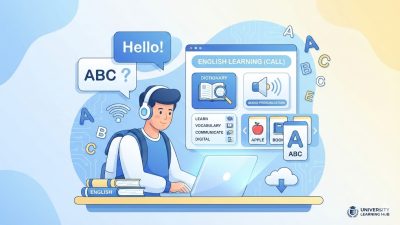
BERITAKULIAH.COM — In a world that is becoming more interconnected, the english language is more of a bridge between different cultures and groups, not just a means of communication. Having been studied and spoken across the globe, English allows for communication among people of different nationalities to promote interaction, learning and development. An example is English enforces unity through communication. Cultural diversity can be an added advantage to any given society. But its comes with its unique challenges like lack of a common contact language. In multilingual countries like South Africa, Indonesia or India, english is commonly accepted as a neutral language. A language that is not specific to any ethnic group but to a wider population of people. Such a phenomenon greatly fosters cooperation and understanding in schools, workplaces and government institutions.
In business, politics and the internet English serves as a common language, enabling interactions and even collaborations. Its importance in maintaining peace in ethnically diverse nations cannot be understated.
Access to Education and Opportunity Especially in tertiary education, English is widely spoken globally. This enables access to advanced knowledge, research, and international level.
English is typically integrated into the educational systems in secondary and higher education institutions, especially international ones. English as a universal language allows for equal opportunity within knowledge, research and global conversations. In countries which may have ethnic minorities which are non-dominant, English serves as great impower renaissance people to shatter social and linguistic confines, placed on higher education, scholarships, and employment opportunities.
As an example, In Indonesia, English is used in classrooms by students from different islands and ethnic backgrounds. The promoting helps give unity and lessens lean on any of the vernaculars.
Culture and Vulnerable Position
While English serves as a means of communication around the globe, it does not come without consequences. The culture posed a risk because the growing emphasis placed on English causes imminent danger to the maintenance of indigenous languages as well which can be regarded as traditional culture. Culture is more than what language serves: it is communication, history, morals, and community identity.
To safeguard such cultures, there are educators and practitioners calling for a more pragmatic approach which gives equal consideration to all languages. With adding English education comes inclusion of native mother tongues, also achieving international competitiveness while proudly retaining cultural identity.
As well as any other English speaking media, English language media shapes how ethnic groups are perceived and represented globally.
Media, Identity, and Representation
English media is responsible for a great extent the global perception and representation of different groups. Positive and diverse representations can eliminate stereotypes, while biased and exclusionary portrayals reinforce them. Media in English should promote equality, reveal silenced narratives, and showcase multicultural realities, reflecting responsible use of media.
Movies, literature, and journalism have an English component that can bring attention and create empathy towards different ethnic groups and issues around the world.
Conclusion
There is great power in the English language as a unifying tool in ethnically diverse society. If used appropriately, it can ease ethnic conflicts, create opportunities, and encourage belongingness. Balanced with the efforts to safeguard local dialects and customs, English should not be seen as undermining diversity, but as a means to protect it while encouraging a greater sense of control and cohesion.
References
- Canagarajah, S. (2006). Changing communicative needs, revised assessment objectives: Testing English as an International Language. Language Assessment Quarterly, 3(3), 229–242. https://doi.org/10.1207/s15434311laq0303_1
- Crystal, D. (2003). English as a Global Language (2nd ed.). Cambridge University Press.
- Kirkpatrick, A. (2007). World Englishes: Implications for International Communication and English Language Teaching. Cambridge University Press.
- Pennycook, A. (2010). Language as a Local Practice. Routledge.
- UNESCO. (2018). If You Don’t Understand, How Can You Learn? Global Education Monitoring Report. Retrieved from https://unesdoc.unesco.org/
Authors: Dimas Prasetyo