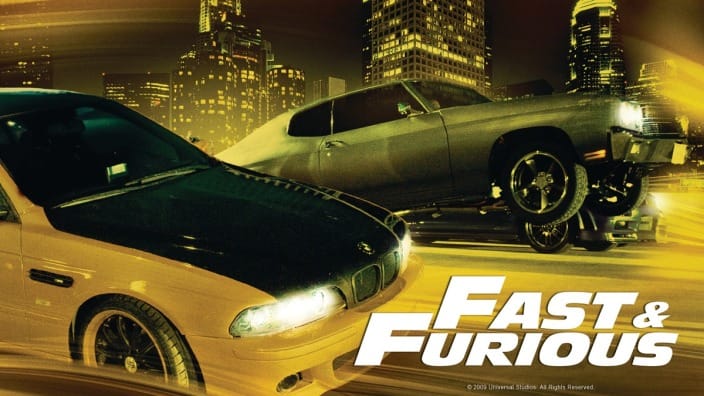
BERITAKULIAH.COM — When The Fast and the Furious first hit theaters in 2001, audiences were drawn to its heart-pounding races, tight crew dynamics, and adrenaline action. But looking back today, nearly 25 years later, it’s clear the franchise has always been more than high-speed engines and night-time drag races.
Beneath its flashy surface lies a powerful, often overlooked theme: hybrid identity the way personal and cultural identities are shaped by movement, migration, and connection across borders.
Identity at the Intersection of Streets and Cultures
From its earliest moments, Fast & Furious positions its characters not as fixed cultural subjects, but as fluid identities navigating multiple worlds.
Dominic Toretto is a first-generation American of Latino descent who lives, works, and leads a family that defies narrow labels. Brian O’Conner (a lawman infiltrating a criminal crew), Letty Ortiz (a woman rooted in street culture), Roman Pearce (a smooth-talking hustler), Tej Parker (a tech-savvy strategist) come from backgrounds that blur conventional identity boundaries, and many more.
Their identities are not singular. They are shaped by:
- Cultural heritage,
- Transnational mobility, and
- Communities they choose rather than those assigned at birth.
In this sense, the film reflects what scholars call hybrid identity an identity created from multiple cultural flows, not one fixed national or ethnic origin.
Family: Beyond Blood, Beyond Borders
One of the franchise’s most resonant ideas is its definition of family. Dom famously says, “I don’t have friends, I got family.” But what does this mean?
In Fast & Furious, family is not defined by DNA, citizenship, or cultural purity. It is forged through shared experiences, loyalty, and mutual survival. This mirrors the real-world experiences of diasporic communities, where belonging often arises from common struggle rather than inherited identity alone.
Characters like Brian a law enforcement officer who chooses to join and protect this family exemplify how hybrid identity is not static but negotiated through emotional connection and moral alignment.
Between Norms and Negotiations
While the early films focus on forbidden races and outlaw crews, they also implicitly reject rigid identity categories. Brian is neither fully inside the law nor fully outside it. Dom is not neatly boxed into one cultural narrative. Each character exists in between a space that reflects lived realities in a globalized 21st century.
Where governments, media, or society often try to define people by where they come from or what box they fit into, Fast & Furious celebrates identities that are fluid, dynamic, and relational.
Why This Matters Now
In an era where debates over nationalism, migration, and multicultural belonging are at the forefront of global conversations, Fast & Furious perhaps unintentionally offers a popular narrative of hybrid identity.
It suggests that belonging isn’t limited to passports, ethnicity, or birthplace. It is shaped through relationships, mobility, and the spaces where cultures intersect.
And maybe that’s why the franchise resonates worldwide: it doesn’t just show cars crossing finish lines it shows people constantly crossing the invisible lines that define identity itself.
Written by: Fitri Ayu Finanty