BERITAKULIAH.COM, Tangsel — We Need New Names follows Darling, a young girl growing up in Zimbabwe during a time of social conflict, poverty, and political instability. After spending her childhood searching for food and imagining a better life, she migrates to America expecting comfort, belonging, and opportunity. Once there, she faces cultural differences, discrimination, and identity conflict as she tries to adapt to her new environment. Over time, Darling becomes increasingly disconnected from her Zimbabwean roots while still struggling to fully belong in American culture.
By the end of the novel, she exists in a liminal space where she is neither fully Zimbabwean nor fully American, reflecting the emotional complexity of diaspora. In We Need New Names, NoViolet Bulawayo portrays migration not as a simple relocation but as a fragmented and emotional process that results in cultural displacement, and through Bhabha (1994) theory of hybridity, Darling’s experience can be understood as existing in a “third space” where identity, memory, and belonging become fluid, negotiated, and unresolved.
NoViolet Bulawayo’s We Need New Names explores the emotional and psychological consequences of migration through the protagonist Darling, whose journey from Zimbabwe to America reveals the complexities of cultural displacement. Growing up in poverty and political instability, Darling’s early life in Zimbabwe is shaped by both survival and community. Her expectations for a better future in America reflect a longing shared by many who experience displacement. However, once she arrives, her identity becomes increasingly fragmented as she navigates unfamiliar cultural systems, language barriers, and racialized social structures. Using Bhabha (1994) theory of hybridity, Darling’s identity can be understood as being reshaped through the negotiation between her Zimbabwean past and her new American environment, placing her in a liminal space that challenges her sense of belonging and self.
Related studies also underscore the importance of the concepts of hybridity and cultural displacement in postcolonial and diaspora literature. According to Madli (2025) in “Cultural Hybridity and Displacement: A Postcolonial Reading of Diaspora Writings,” diaspora literature not only reflects struggle and a sense of loss but also demonstrates that displacement can generate creativity and new perspectives, while cultural hybridity serves as a source of strength for migrants. This study emphasizes how postcolonial theory helps understand migration and its impact on identity formation. Similarly, D’Cruze’s (2023) analysis in “Reconstructing Postcolonial Identity: A Comparative Analysis of Cultural Hybridity in Salman Rushdie’s Novels” indicates that postcolonial identity is a dynamic and fluid construction, where cultural hybridity—the blending of diverse cultural elements—is a key concept for understanding the transformative impact of the colonial encounter. D’Cruze (2023) argues that hybridity functions as a powerful tool for individuals to navigate the complexities of postcolonial existence. Collectively, these findings reinforce that Darling’s experience in Bulawayo’s novel is a reflection of the continuous negotiation of identity within Bhabha’s third space.
The cultural displacement in the novel first appears before Darling even leaves Zimbabwe. The narrator states: “Look at them leaving in droves… fleeing—to all over… leaving everything that makes them who and what they are” . This quote reflects the loss of rootedness that migration produces, marking the emotional rupture that initiates Darling’s hybrid identity. Bhabha argues that displacement positions individuals in a space of “in-betweenness,” where identity is no longer tied to one cultural source but instead becomes fluid and constantly reconstructed. Darling enters this condition the moment migration becomes inevitable, as home transforms into a memory rather than a physical space.
Once Darling arrives in America, her cultural dislocation deepens. She reflects: “Because we were not in our country, we could not use our own languages… when we spoke our voices came out bruised… what we really wanted to say remained folded inside, trapped” . Language becomes a site of identity loss, revealing how assimilation demands restraint rather than expression. Bhabha’s theory emphasizes language as central to hybridity because meaning is negotiated through translation, mimicry, and adaptation rather than inherited. Darling’s speech becomes neither fully American nor fully Zimbabwean—evidence of her hybrid position.
The immigrant community in the United States attempts to reshape identity to survive. By naming their children with American names, they demonstrate the pressure to erase difference: “We gave them names that would make them belong in America… names that did not mean anything to us” . This renaming represents an attempt to conform, but it also symbolizes cultural erasure. Bhabha describes hybridity as destabilizing fixed identity categories—not replacing one identity with another, but merging them into a new, ambiguous form. The names therefore represent not pure assimilation, but a hybrid performance of belonging.
Darling’s emotional distance from home becomes clearer through her conversations with those still in Zimbabwe. When someone casually asks: “How’s New York? How’s my man Obama?” , the disconnect becomes humorous yet painful. Zimbabweans romanticize America, unaware of Darling’s internal struggle. This reflects Bhabha’s idea that the hybrid subject is both visible and misunderstood—belonging everywhere and nowhere.
By the end of the novel, Darling’s sense of belonging remains unresolved. The narrator states: “When we die, our children will not know how to wail… They will not spill beer on the earth” . This moment reveals generational identity loss: displacement extends beyond the migrant to reshape entire family lines. The result is not cultural replacement, but a permanent state of hybridity—culturally fragmented, hybrid, and unanchored.
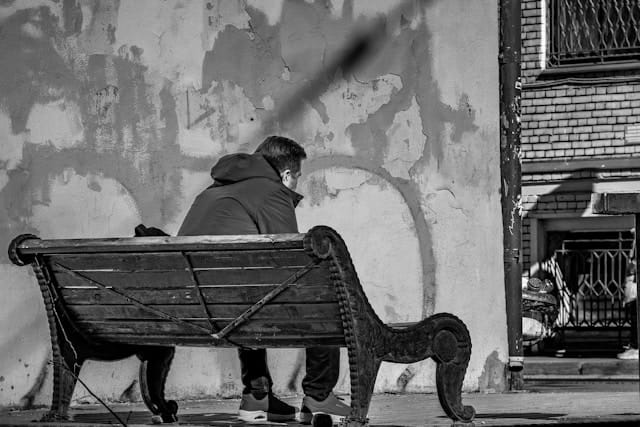
Cultural displacement reveals that identity is not fixed, but deeply shaped by movement, memory, and belonging. When individuals shift between cultures, they often experience a sense of in-betweenness, where the familiar no longer fully fits and the new cannot yet be fully claimed. This condition creates emotional tension, loss, and uncertainty, but also opens a space where identity becomes flexible, negotiated, and hybrid. Ultimately, cultural displacement shows that belonging is not defined by geography alone, but by the ongoing relationship between past and present selves.
References
- Bulawayo, N. (2013). We need new names. Reagan Arthur Books.
- Bhabha, H. K. (1994). The location of culture. Routledge.
- D’Cruze, M. P. (2023). Reconstructing Postcolonial Identity: A Comparative Analysis of Cultural Hybridity in Salman Rushdie’s Novels with a Focus on the South Asian Context. Journal of Research in Social Science and Humanities, 2(12), 1-10.
- Madli, L. (2025). Cultural Hybridity and Displacement: A Postcolonial Reading of Diaspora Writings. Aksharasurya, 8(03), 40-46.
Author: Raiskhania Putri
Student at Universitas Pamulang